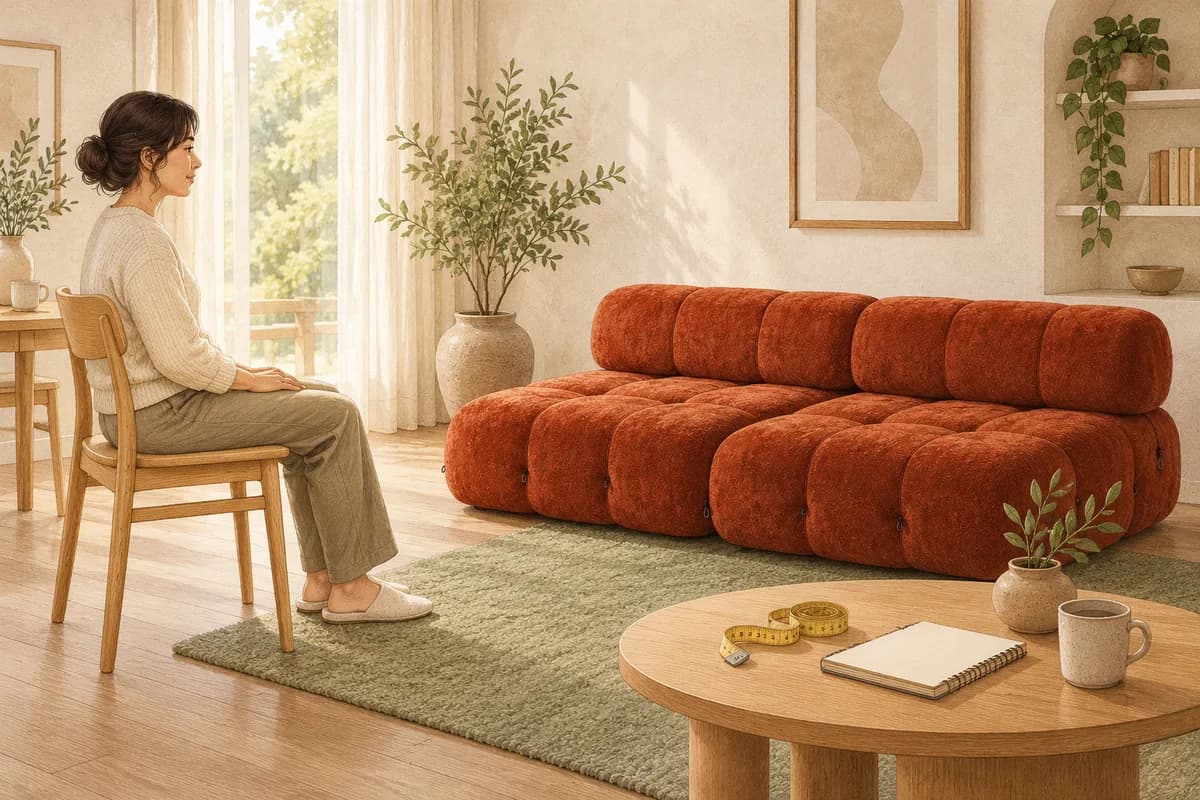
How is overall height different from seat height?
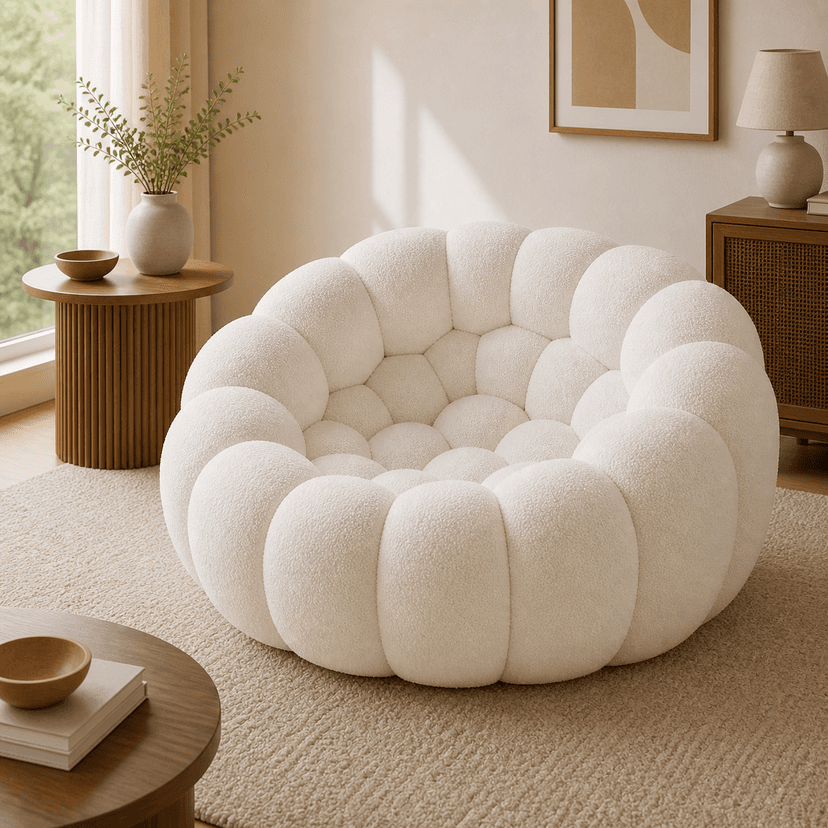
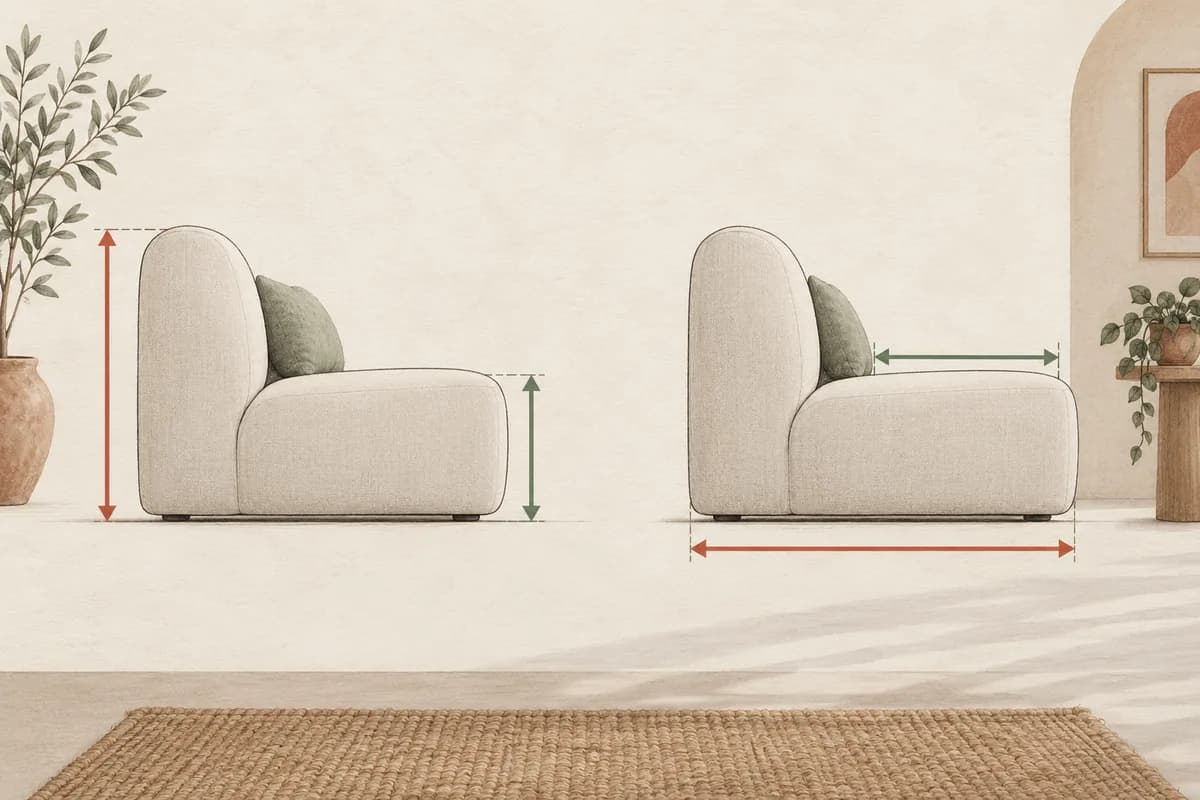
Overall height normally describes the tallest part of the sofa; seat height concerns the seating surface above the floor. A catalogue figure for overall height therefore cannot tell you where you will sit. With a soft seat, also ask whether the stated measurement is taken without a person sitting on it and at which point on the surface. For example, the current Bubble BS-BUBBLESOFA-01 catalogue lists overall dimensions of 118 × 116 × 65 cm. The 65 cm figure should not be relabelled as seat height. The Chameleon single-seat record likewise lists overall dimensions of 95 × 95 × 70 cm, not a verified sitting height.
What is the difference between overall and usable seat depth?
Overall depth concerns the sofa's full front-to-back footprint. Usable seat depth is the space between the front seat edge and the position where your back meets the backrest or cushion. A thick, angled or movable back cushion can change that usable space without changing the overall footprint. Ask where the measurement starts and ends and whether the normal back cushion is in position. Do not compare one seller's full product depth with another's seating depth as if they measured the same thing. Keep the room-layout measurement and the sitting measurement in separate fields on your record.
How can you measure a seat you already like?
Use a chair or sofa you sit on regularly as a reference, rather than searching for a universal ideal number. Record the floor-to-seat measurement and front-edge-to-back-contact depth with the cushions in their usual positions. Note whether your figures are approximate and whether the surface was unloaded. Then sit as you normally would and describe what changes: whether your feet reach their usual resting position, how far you move back, and where the backrest contacts you. This is a personal comparison, not a product test or an ergonomic certification. It becomes useful when the candidate sofa's dimensions are supplied using comparable definitions.
What should upright, cross-legged and reclined sitters check?
Start with the way you expect to use the seat most often. For sitting upright, compare back contact, usable depth and where your feet rest. For sitting cross-legged, check usable width as well as depth and the space beside any arms. For leaning back, ask about the backrest angle and where the support reaches. Think about changing position and standing up too. A seat that looks generous for reclining may feel different when reading upright or rising from it. These are questions to investigate, not a claim that a low sofa suits every person. If you have specific access or health needs, do not treat this buying worksheet as medical guidance.
Does compressed packaging tell you the firmness or structure?
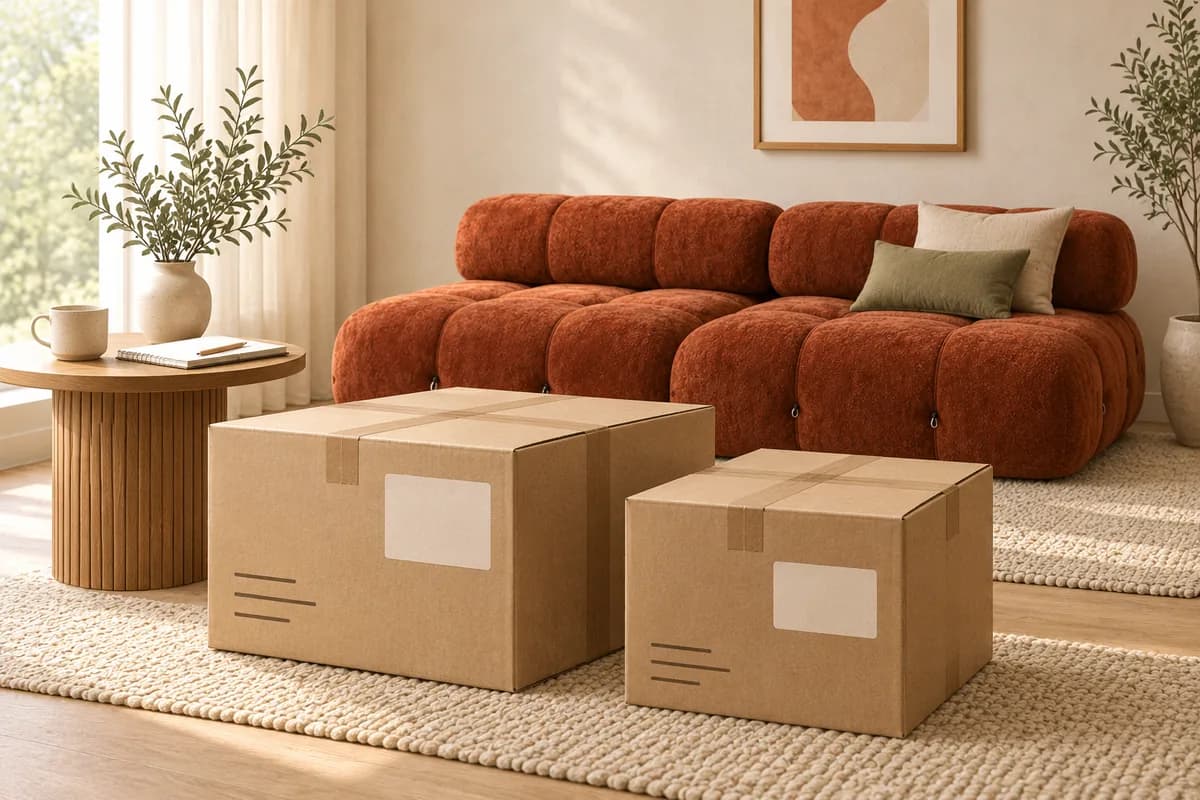
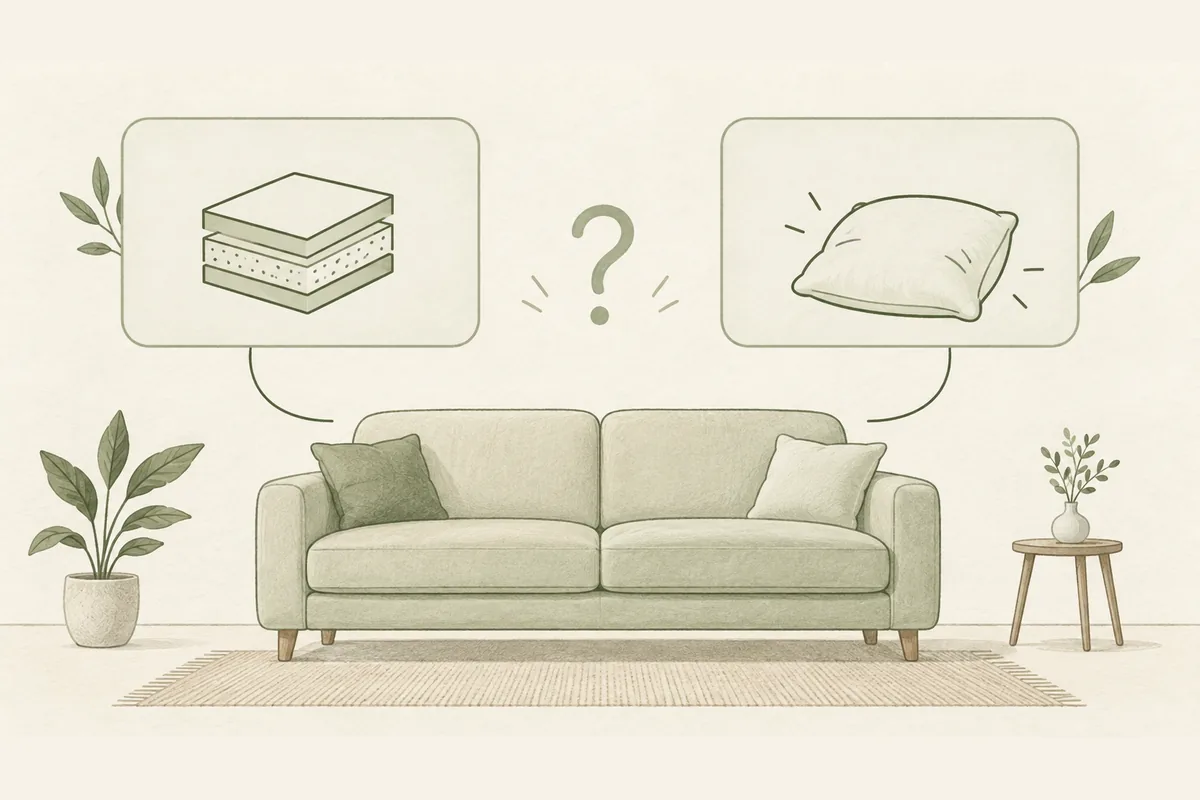
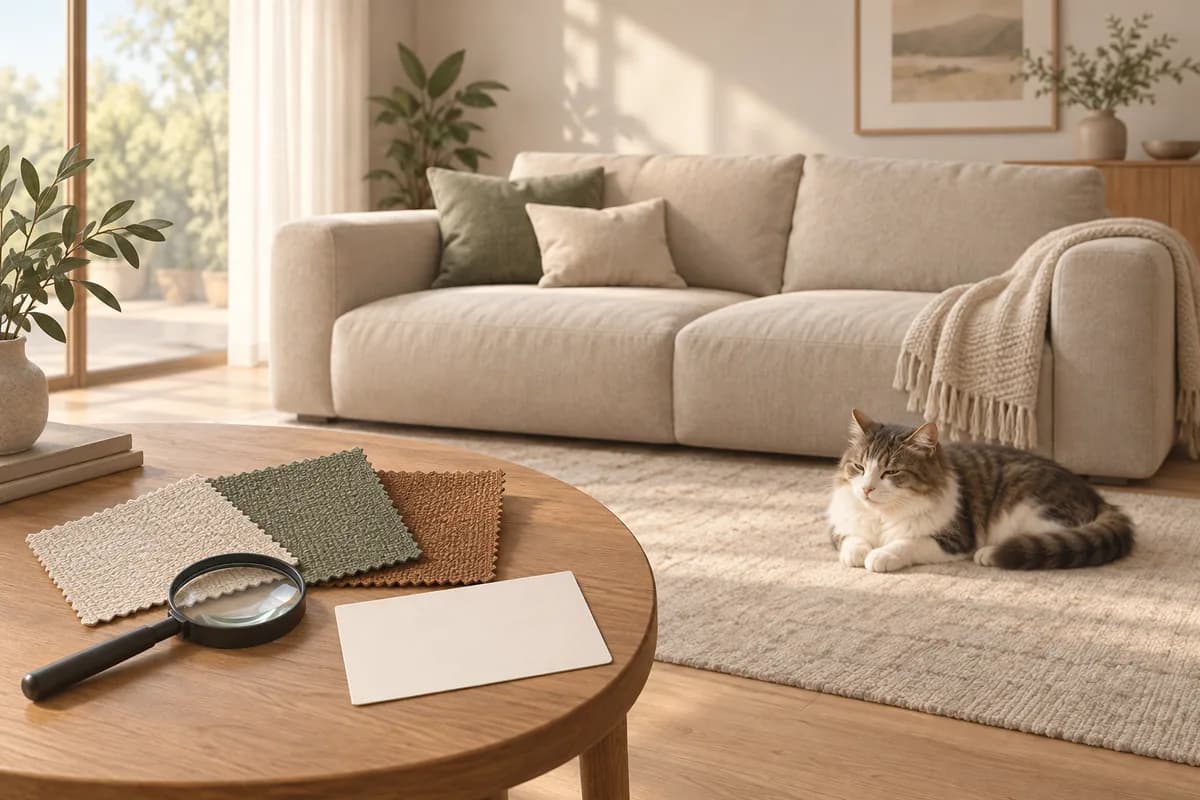
No. Compressed packaging describes the transport condition, not a measured firmness level, foam density or the support you will feel after recovery. The phrase boneless is also not a substitute for a clear description of the particular model's construction. Ask which materials form the seat and back and what verified specifications are available. The current BoxSofa catalogue describes compressed foam and upholstery but does not provide a sitting-pressure or fatigue test in these records. This guide therefore promises neither a particular load capacity nor a fixed service life. Follow the model's recovery instructions before assessing an unpacked seat; packaging size is irrelevant to its seating depth.
How can you ask for missing seat dimensions?
Name the exact product and selected variant, then ask for seat height from the floor and usable seat depth with the usual back cushion in position. Request the measurement points and whether the figures are unloaded measurements. If a listing uses a term such as front height, ask what point it describes before putting it in the seat-height field. A useful question is: For Chameleon Mario in this variant, what are the usable seat dimensions, and how were they measured? An unknown figure should remain unknown on the worksheet. Avoid converting the overall dimensions or estimating centimetres from an illustration to fill that gap.
What can specifications tell you, and what needs a personal trial?
Clear specifications can help you compare footprints, seat dimensions and stated construction. They can also show which questions remain unanswered. They cannot fully describe how the surface feels to you, whether the back contact suits your posture or how easy you find getting up. If a trial is available, use your usual sitting positions; do not assume a trial programme exists. Treat the diagrams here as definitions, not measured drawings of the linked products. Check package access using the separate measuring guide and any unfolded footprint using the rental sofa-bed guide. Neither room fit nor delivery access is evidence of daily seating comfort.
A practical checklist before you decide
- Usual chair or sofa: ____; candidate model and variant: ____.
- Seat height: familiar seat ____ cm; candidate ____ cm or unknown; measured loaded/unloaded: ____.
- Usable seat depth: familiar seat ____ cm; candidate ____ cm or unknown; back cushion position: ____.
- Preferred posture and foot position: ____; back contact and space to change posture: ____.
- Construction information and source: ____; questions needing dimensions, clarification or a personal trial: ____.
Sources and applicable terms
General planning guidance, not a physical product or access test. The chosen variant's measurements and instructions take precedence. Terms can change; check them before payment.