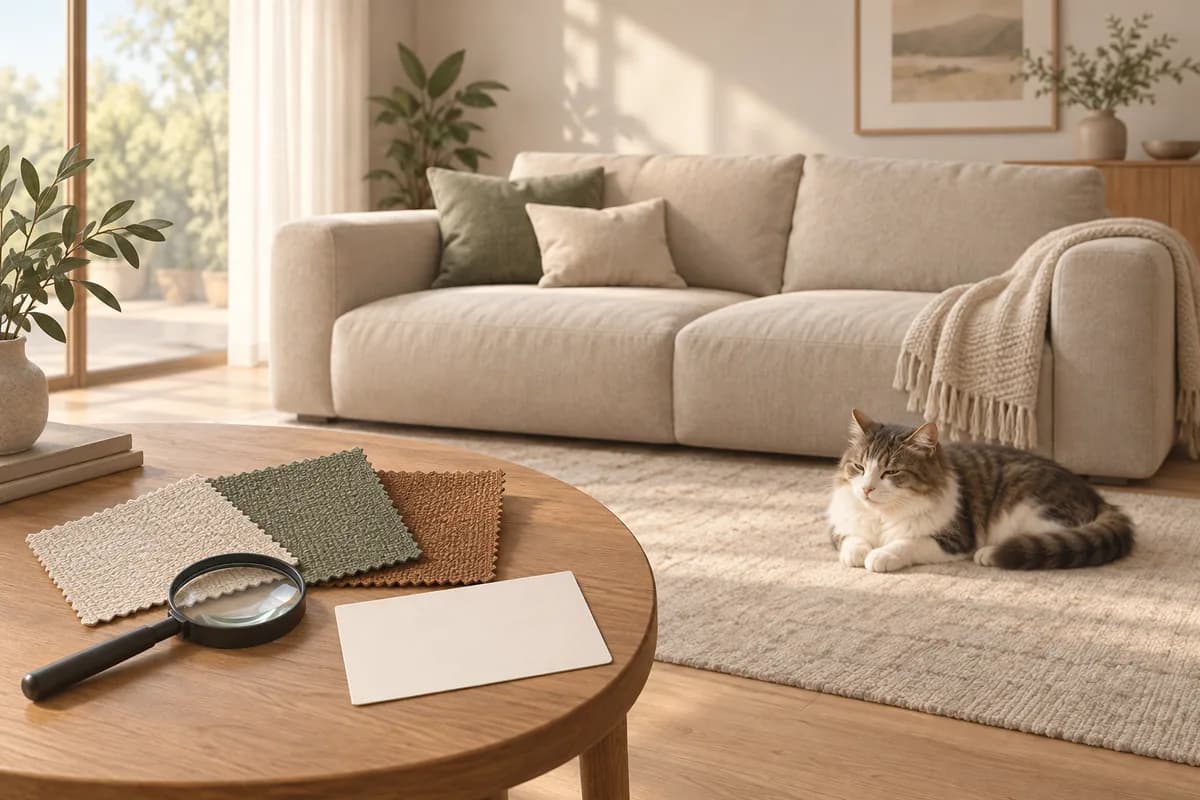
Which details identify the upholstery I am actually buying?
Start with the product reference, colour, fabric name, fibre composition and construction, where supplied. Words such as velvet, chenille or “skin-friendly” do not provide all these details. Ask which specification applies to the selected cover. The public Bubble and Chameleon Mario listings describe skin-friendly fabric alongside compressed foam, without a fabric composition or pet-resistance test. Use the model references to request missing details.
Does a high abrasion count mean a cat cannot damage the sofa?
No. Abrasion resistance concerns wear from rubbing; it does not establish resistance to claws catching and pulling yarns. ACT's abrasion guidance explains that Martindale and Wyzenbeek assess flat abrasion and that higher counts do not establish a longer service life. Record the method, result and identified fabric together. Two unexplained “rub counts” do not make a comparison. Request the available report; do not convert cycles into years or commercial-use thresholds into pet guarantees.
Are pilling and snagging the same problem?
No. Pilling means attached fibre balls on the surface; snagging means pulled yarns. ACT's woven-fabric guidance addresses pilling, while its knit-fabric guidance lists snag testing separately. The relevant evidence depends on the fabric construction. Request the method, result and fabric identity for each property. A pilling grade is not a snagging grade; neither certifies the sofa against your pet's behaviour. Missing evidence leaves a claim unconfirmed, not disproved.
What can a close-up photograph or fabric sample tell me?
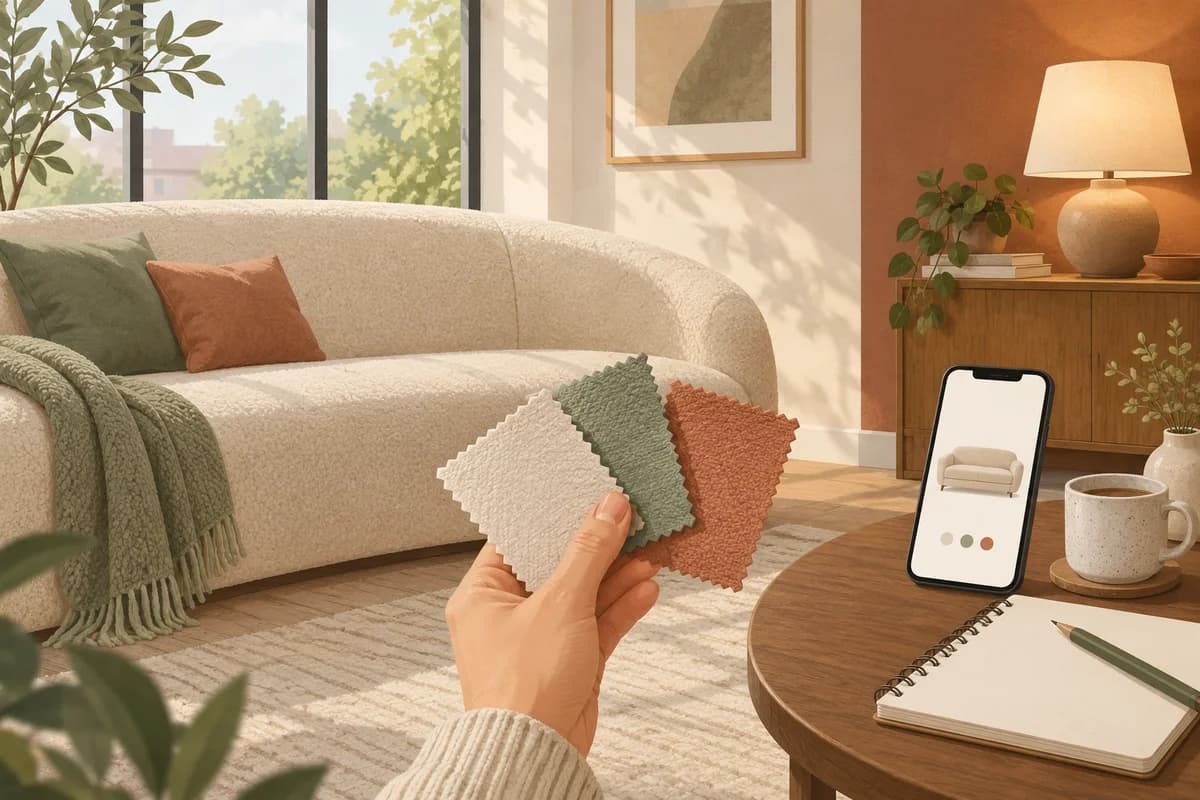
It helps you inspect texture, visible loops, pile and seams, but cannot certify pet suitability. Request a clear close-up of the actual upholstery, or a sample if available. A sofa's silhouette does not identify its fabric construction. Note observations and questions for the seller. Do not scratch the sofa or sample with a sharp object to simulate claws: damage does not produce a standard test result.
Can colour tell me whether pet hair will be easy to remove?
Colour helps you judge how noticeable hair looks; it does not establish how easily it comes off. If you obtain a sample, compare it with a few naturally shed hairs in your room's usual light. This is a personal appearance check, not a performance test. Ask which hair-removal tools and methods are permitted. Keep visibility and removal separate: hair that blends into a colour still needs removing.
Do “easy care” or “stain resistant” mean the cover is washable?
No. These statements answer different questions and need specific limits. Swyft's official fabric-care page distinguishes its stain-resistant fabrics from other options; those brand-specific details do not apply to BoxSofa. Ask for the selected cover's written care instructions. For removal, washing and drying, use our cover-washing checklist. Do not infer washing permission from a zip or copy another brand's cleaning recipe.
How can I compare two shortlisted sofas without inventing a score?
Use these six fields for both exact variants, noting each answer's source and date. This original worksheet records purchase evidence and open questions, not measured durability scores. Seating fit remains a separate decision; the seat-height and depth guide helps with that check.
What should I ask before ordering, and where can I verify the evidence?
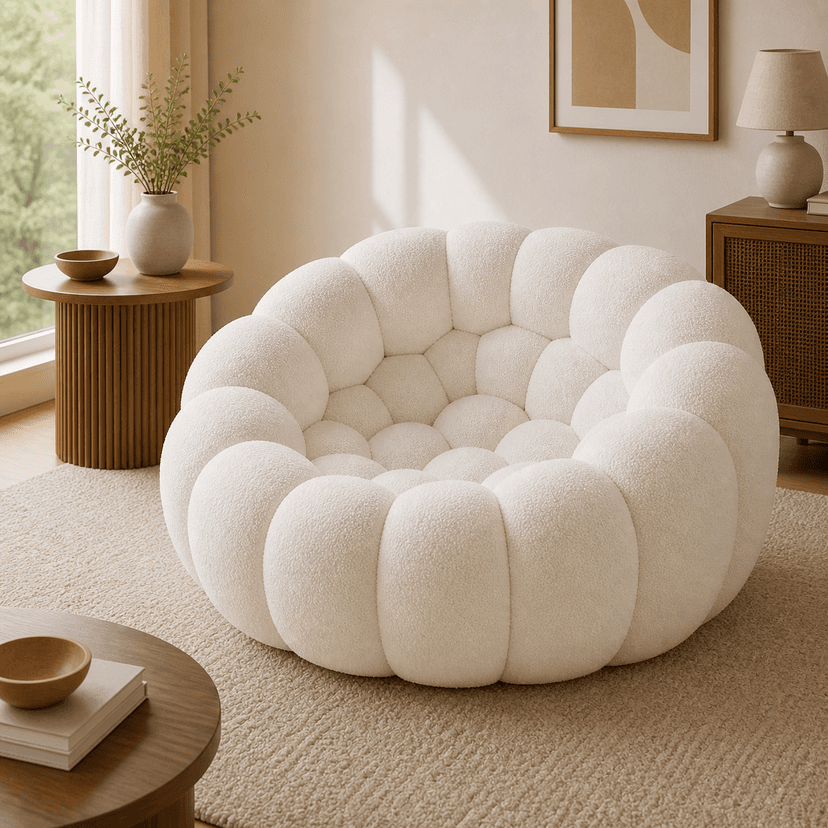
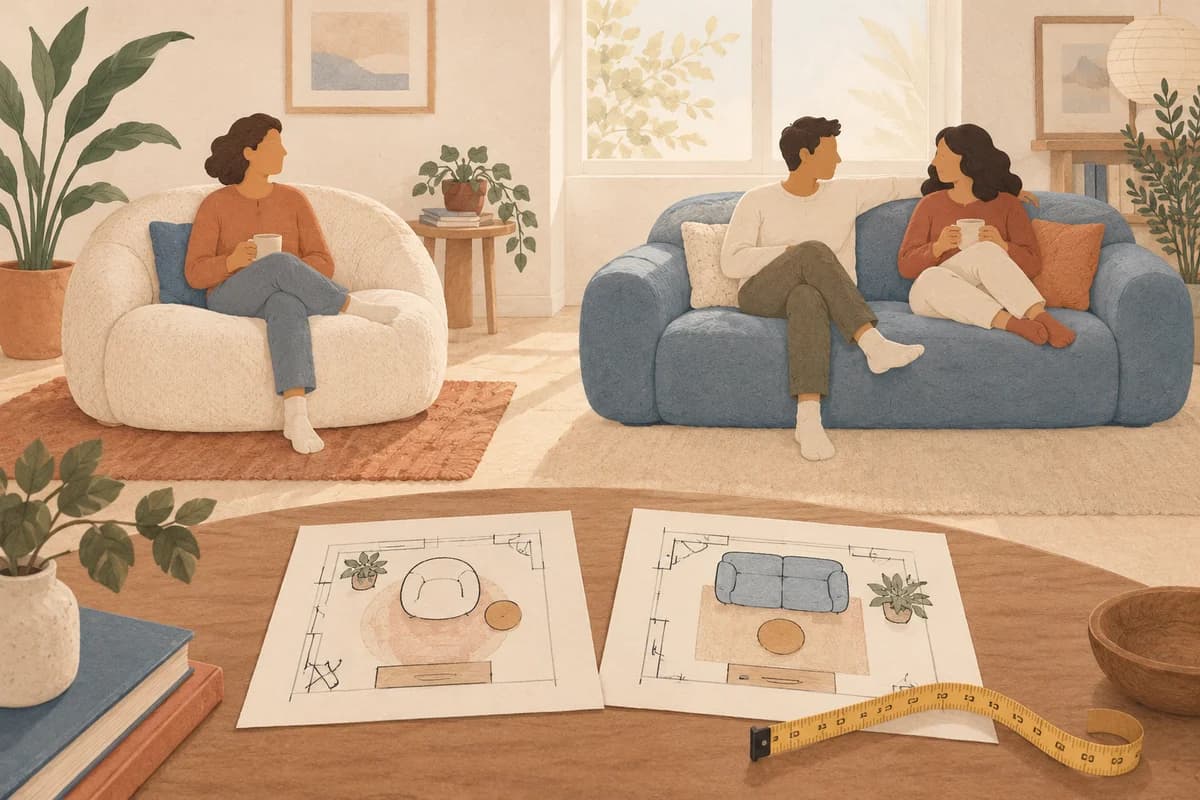
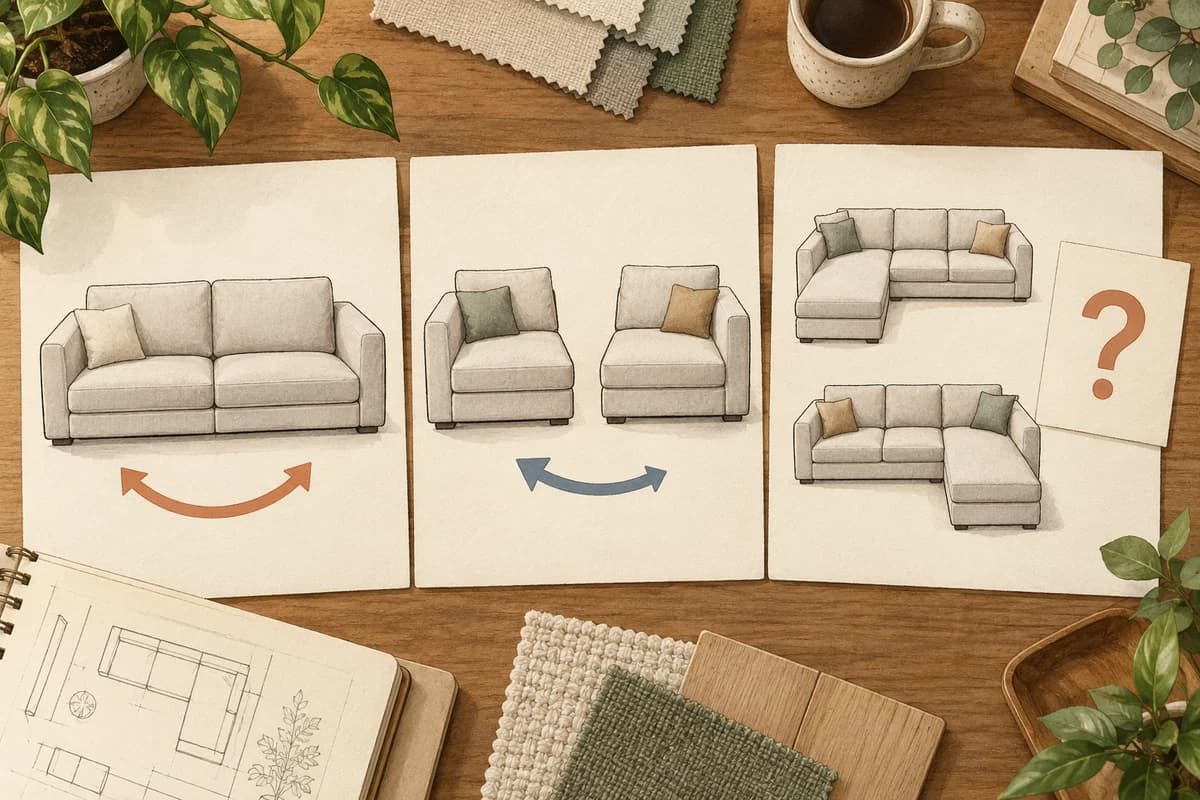
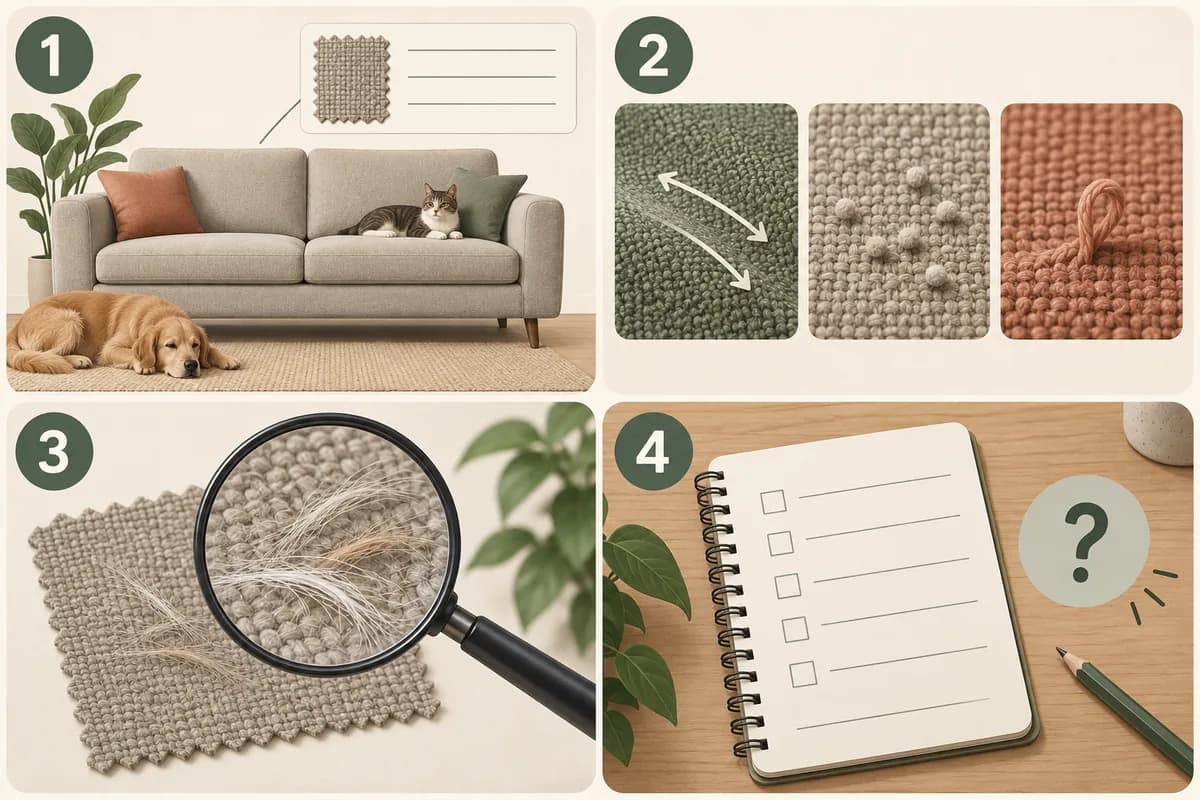
Ask: “For this model and colour, which upholstery is supplied? What abrasion, pilling and snagging information is available, and what written care and hair-removal methods apply?” Save the answer with the worksheet, particularly when an unknown detail matters to your choice. Follow the same four checks shown in the explainer: 1. Identify the exact model, colour and fabric. 2. Record abrasion, pilling and snagging evidence separately. 3. Inspect the sample's surface and fur visibility. 4. Obtain written care answers and mark unknowns. Sources checked on 14 October 2026: the linked ACT pages explain test terminology and limits; Swyft provides a clearly limited merchant example; the BoxSofa listings provide the model facts. No first-hand pet test is claimed. The cover and explainer are AI editorial illustrations, not product photographs or fabric tests. Prepared by the BoxSofa editorial team with AI-assisted editing · 14 October 2026.
| Evidence to request | Model A: answer / source / date | Model B: answer / source / date |
|---|---|---|
| Model, colour, fabric identity and composition | ____ / unconfirmed | ____ / unconfirmed |
| Abrasion: method and reported result | ____ / unconfirmed | ____ / unconfirmed |
| Pilling: method and reported result | ____ / unconfirmed | ____ / unconfirmed |
| Snagging: relevant evidence and its scope | ____ / unconfirmed | ____ / unconfirmed |
| Surface, fur visibility and permitted removal tool | ____ / unconfirmed | ____ / unconfirmed |
| Written care limits and unanswered questions | ____ / unconfirmed | ____ / unconfirmed |
A practical checklist before you decide
- Identify the exact model, colour and fabric.
- Record abrasion, pilling and snagging evidence separately.
- Inspect the sample's surface and fur visibility.
- Obtain written care answers and mark unknowns.
Sources and applicable terms
General planning guidance, not a physical product or access test. The chosen variant's measurements and instructions take precedence. Terms can change; check them before payment.