What do you mean by changing the direction?
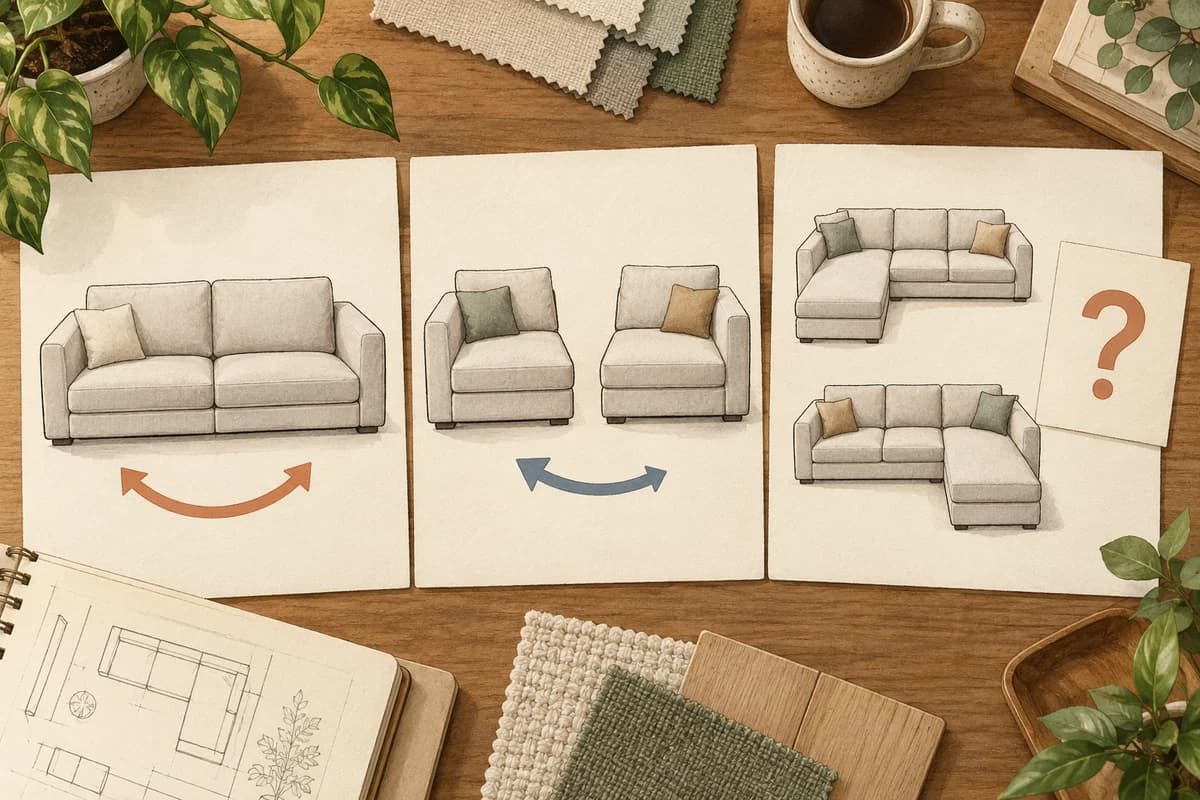
First name the change you want. Turning the entire sofa to face another wall preserves its internal arrangement. Moving a separate chair or footrest changes where that item sits. Switching a chaise or return from one side to the other changes the sofa's configuration and may require different component positions or parts. Draw the existing arrangement and the desired one, with a front arrow on both. Write which pieces would change places. A drawing makes the request precise, but does not establish that those pieces may be detached. If you only want the sofa to face a different wall, do not treat that as evidence of a reversible corner configuration.
Does left mean my left while sitting or while facing the sofa?
Use the seller's stated viewpoint, then mark it on your sketch. Swyft's Model 06 right-corner product page defines left and right while facing the sofa. That definition illustrates why the viewpoint matters; it is not a rule to impose on every seller or listing. Describe the intended result in words as well: “Standing in front and looking at the sofa, I want the extended section on my right.” Keep an arrow for the front and identify the extended piece. Avoid relying on a mirrored room photograph, an unlabeled floor plan or the word right without a viewpoint. Ask for clarification if the product title and diagram appear inconsistent.
If the sofa has several pieces, can each become a separate seat?
Only if the model's information confirms that use. Separate delivery pieces do not by themselves establish that each piece is a complete standalone seat. A part may depend on a neighbouring arm, back or connection in its intended arrangement. Likewise, a footrest should not be counted as an independent seat without confirmation. Identify each part by the seller's name and ask which configurations are supported. A seam, zip or visible gap does not prove there is a user-removable connection underneath. Do not pull parts apart to find out. If no relevant instructions are available, record independent use as unknown and base your purchase on the configuration that is actually documented.
What evidence shows that a layout can really be changed?
Look for an explicit statement about the change, supported by the exact model's components and instructions. IKEA's VIMLE product 296.350.58 explicitly allows its chaise section on either side. Swyft's Model 03 information names left-arm, right-arm and middle modules and describes base clips. These are different, model-specific pieces of evidence, not interchangeable promises. A statement that both left and right versions are sold is weaker than confirmation that your chosen set converts between them. Ask whether the same supplied parts are enough, whether additional parts are needed and where the approved procedure is documented. Connection hardware alone does not prove that every imaginable arrangement is supported.
What can I confirm from the current BoxSofa examples?
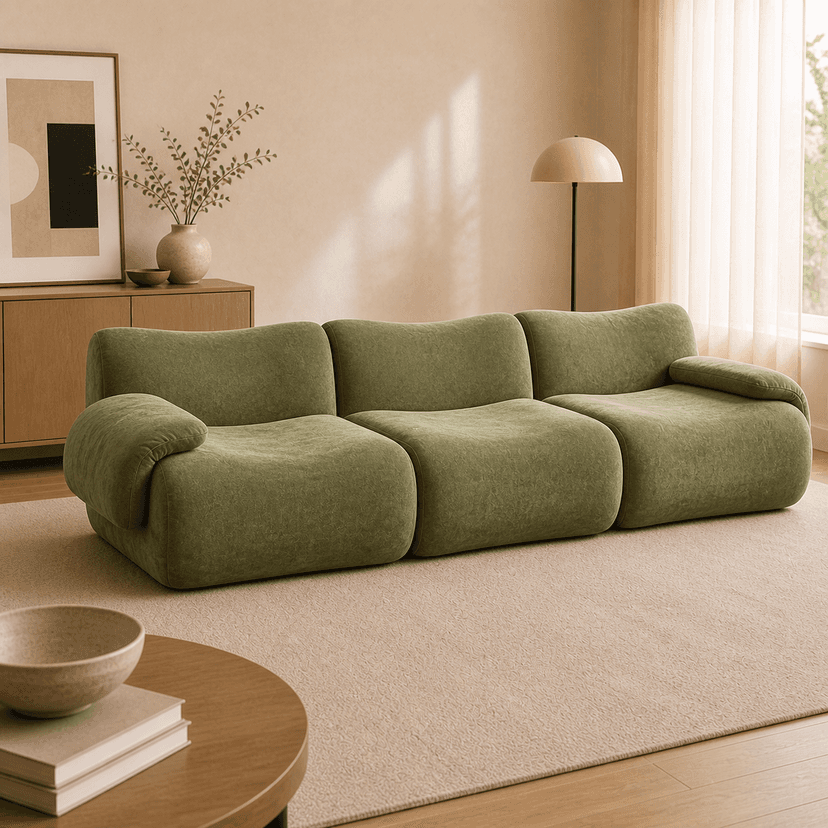
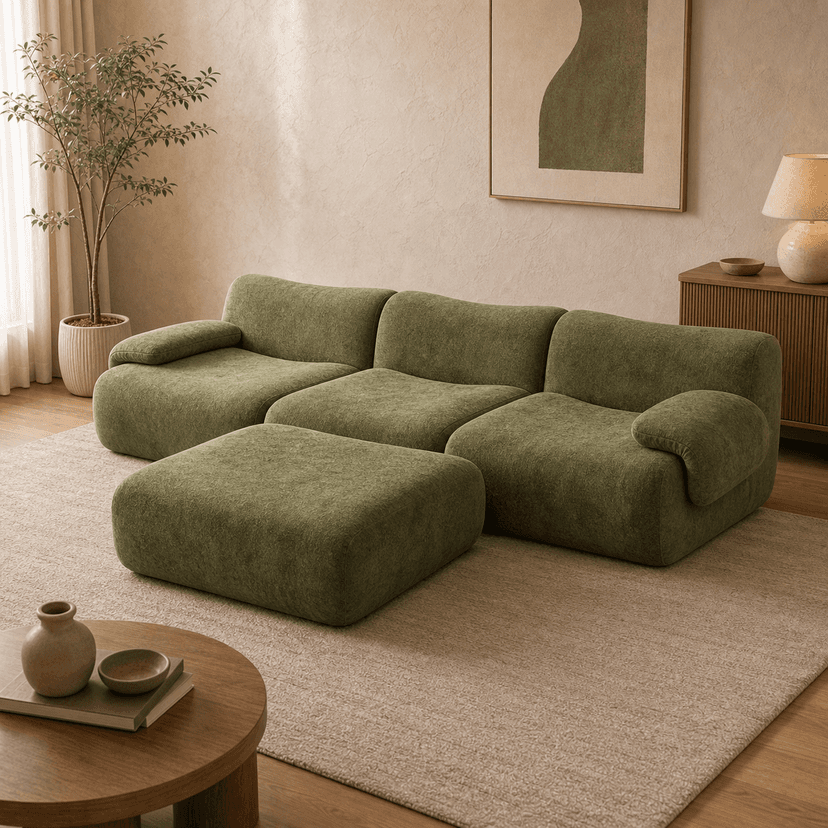
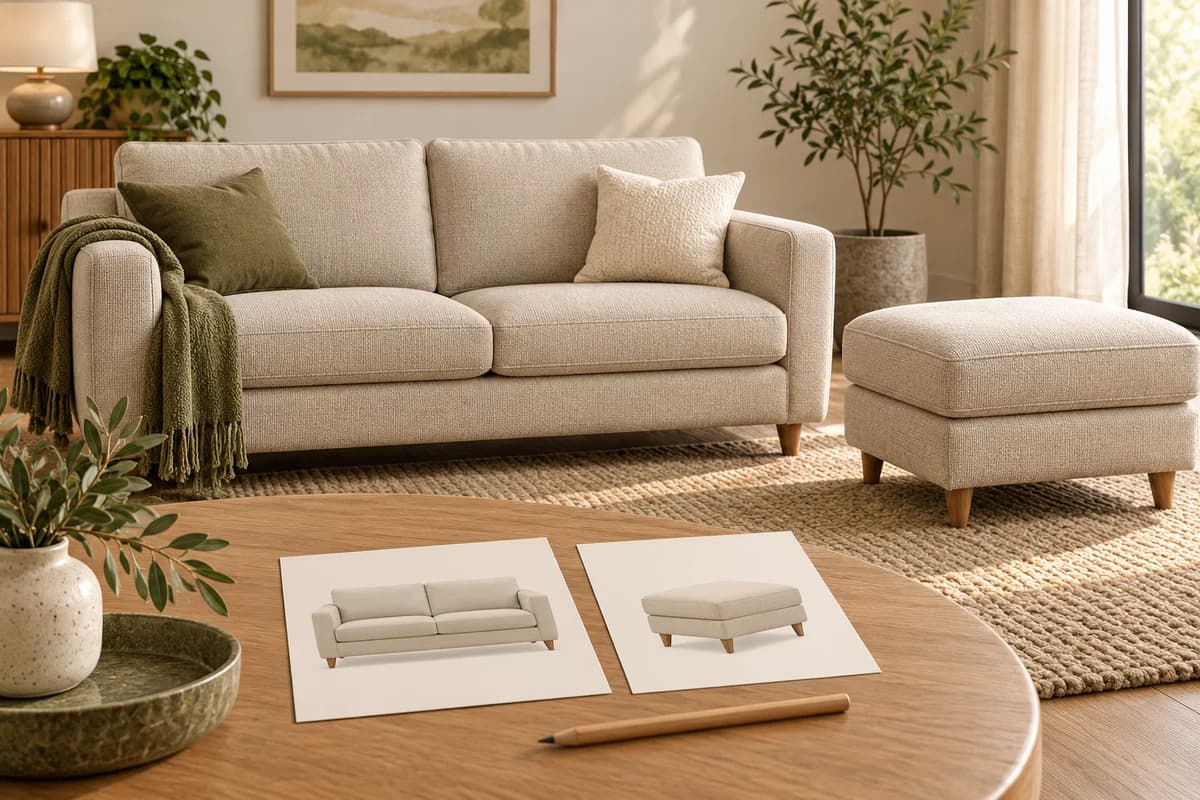
Use the component descriptions as starting points for questions. The checked catalogue and public pages identify Chameleon (Mario) BS-CHAMELEONMARIOSOFA-01 as a single-seat variant. Remy BS-REMYSOFA-04 lists a two-arm double seat plus an armless single seat; Remy BS-REMYSOFA-10 lists a two-arm double seat plus a footrest. Those entries distinguish the selected products and their listed parts. They do not provide an approved left/right conversion procedure, connection specification or standalone-use permission for the Remy components. Those capabilities remain unknown. Do not transfer IKEA's reversible-chaise statement or Swyft's clip description to these BoxSofa products, or describe any of them as freely interchangeable.
How do I fill in the worksheet without assuming the answer?
Complete one worksheet per exact variant and proposed change. For each row, save the relevant product page or instruction reference and its check date. Separate what the page actually states from what you would like the sofa to do. For example, “footrest listed” is a component observation; “may attach on either side” needs its own evidence. Write unknown where evidence is missing rather than using a tick. The final decision can be “confirmed for this layout”, “different parts required” or “not yet confirmed”. For choosing how many people need places and comparing complete arrangements, use our separate seating-layout guide. This worksheet answers a component and orientation question, not a seat-count or comfort question.
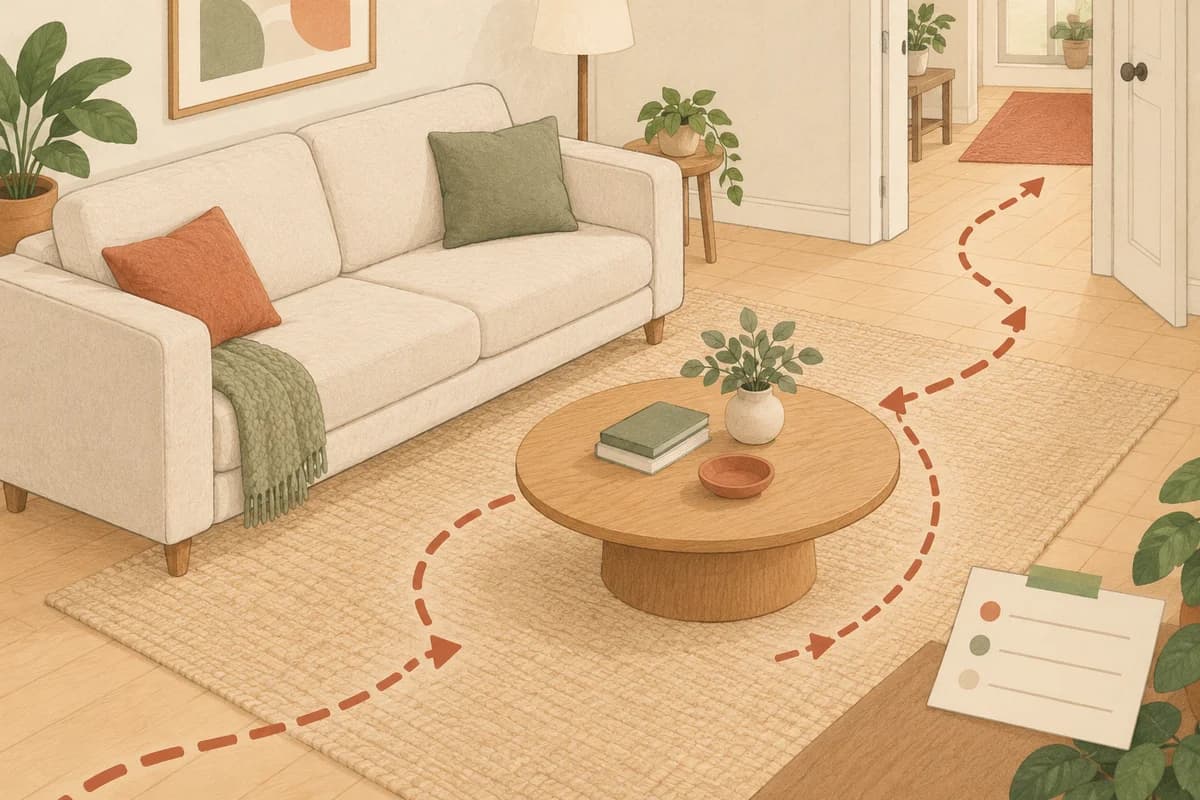
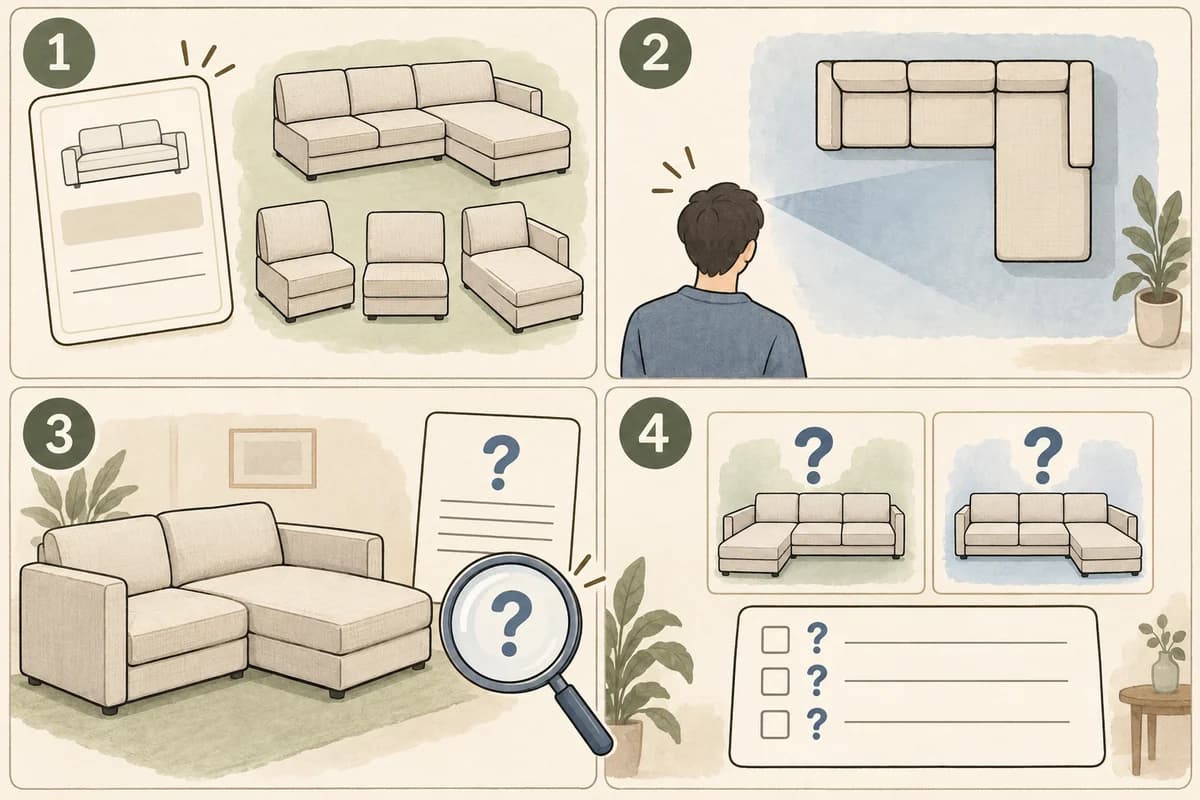
What are the four steps shown in the illustrations?
Follow the four steps in order: save the variant and parts; mark the viewing direction; check connection and standalone-use instructions; confirm the intended configuration. Work from pages, instructions and a sketch before attempting any change. If a confirmed procedure involves handling furniture, follow that procedure and its handling requirements; do not infer that one person can do it. The cover and four-step image are generic AI editorial illustrations. They are not photographs of the linked products, measured layouts, connection tests or instructions for detaching parts. A proposed arrangement in a drawing shows the question to ask, not a configuration that has passed a product test.
What should I ask before ordering a sofa I want to rearrange?
Ask: “For this exact SKU and supplied parts, can I change from the configuration in sketch A to sketch B? Which viewpoint defines left and right? Which parts connect, which may stand alone, and are different parts required? Please identify the instructions for that change.” Save the reply with the product link and both sketches. If the change is essential and remains unconfirmed, keep the choice open. Future moving and recompression are covered in the moving guide and need their own evidence. Sources checked on 21 October 2026. This original editorial worksheet records published information and open questions; it does not claim a physical reconfiguration, stability or load test.
| Field to confirm | Evidence / source / date | Your answer or unresolved point |
|---|---|---|
| Exact SKU, colour and supplied components | ____ | ____ / unknown |
| Change requested: turn whole sofa, move separate piece, or reconnect modules | ____ | ____ / unknown |
| Left/right viewpoint and a front arrow on the sketch | ____ | ____ / unknown |
| Component identities: arm, back, corner, seat or footrest | ____ | ____ / unknown |
| Connection type and approved separation instructions | ____ | ____ / unknown |
| Which parts may be used independently | ____ | ____ / unknown |
| Target layout and any different or additional required parts | ____ | ____ / unknown |
| Seller's written confirmation, instruction reference and decision | ____ | ____ / unknown |
A practical checklist before you decide
- Save the exact SKU and a list of the supplied components.
- Mark the front of the sofa and the viewpoint used to describe left and right.
- Find model-specific evidence for connections, separation and standalone use.
- Confirm the intended configuration in writing; leave unsupported changes undecided.
Sources and applicable terms
General planning guidance, not a physical product or access test. The chosen variant's measurements and instructions take precedence. Terms can change; check them before payment.
- Chameleon (Mario) single seat, orange red — BS-CHAMELEONMARIOSOFA-01
- Remy three-seat, olive green — BS-REMYSOFA-04
- Remy combination, olive green — BS-REMYSOFA-10
- Single lounger or two-seat sofa: seating-layout guide
- Moving an expanded sofa: separate packing and access checks
- IKEA: VIMLE 296.350.58 product details
- Swyft: Model 03 components and connections
- Swyft: Model 06 right-corner viewpoint