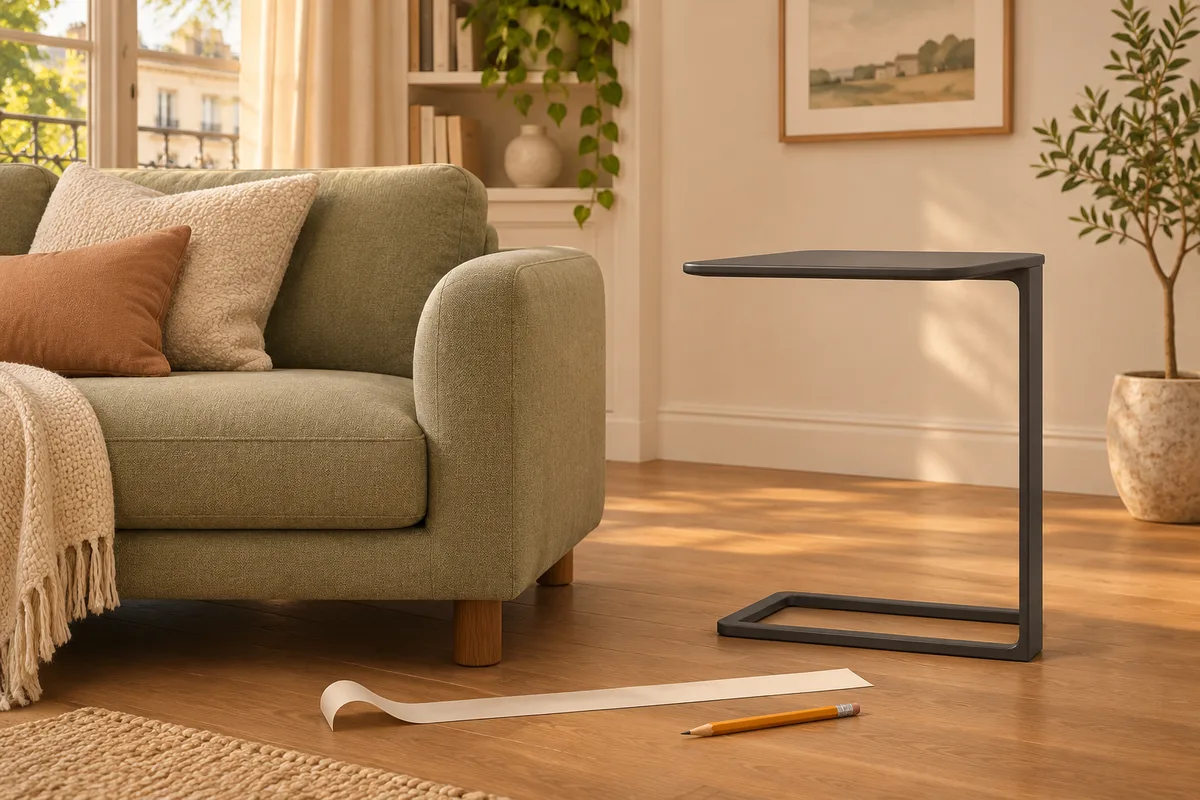
What makes a C-shaped table different from a freestanding side table?
A C-shaped table has a low base and an offset top connected on one side. Some bases are designed to slip below seating so the top can come closer to you. A freestanding side table can stay beside the sofa with no overlap. If you only need a place for your phone or a book, mark a freestanding position too so you can compare the reach and floor space.
Which gap do I measure under the sofa?
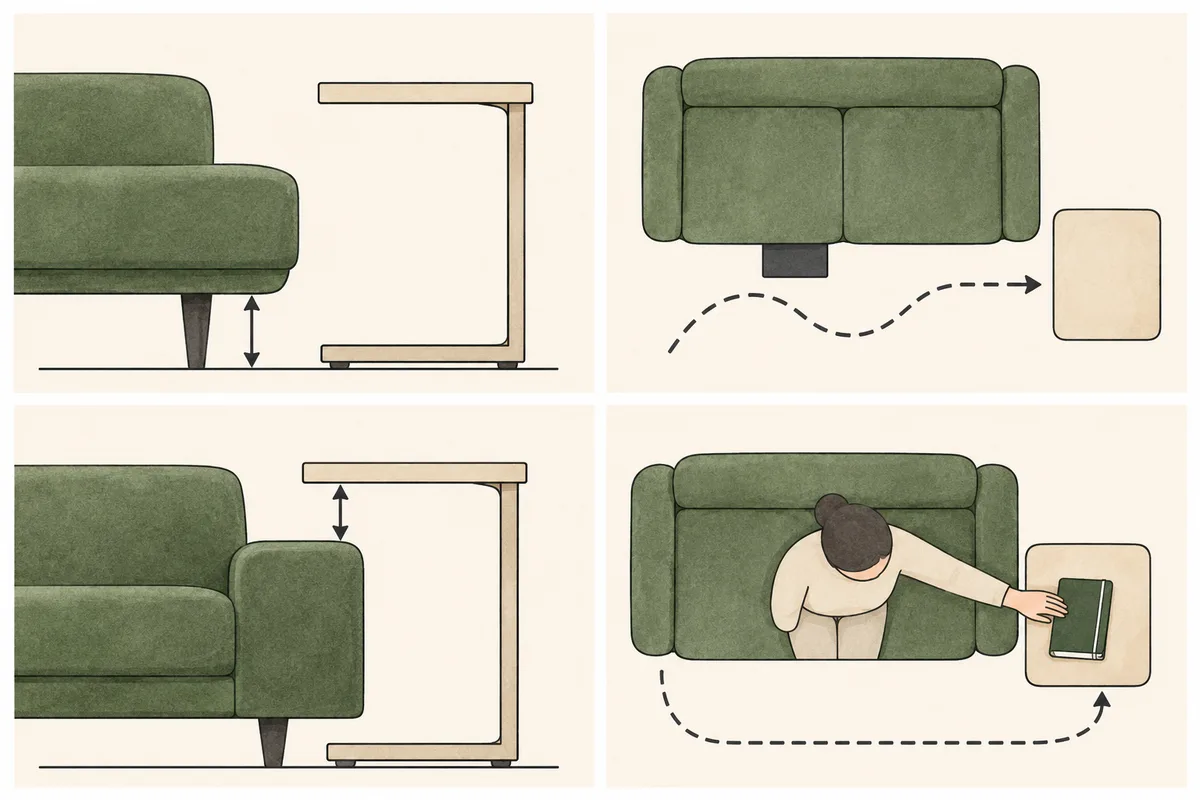
Measure from the finished floor to the lowest point across the whole path the base will take. Compare it with the tallest part of the table base, including any wheels, pads or raised hardware. If the sofa or table sits on a rug, measure in that setup. For a practice calculation, a 5 cm base cannot pass through a 4 cm opening. Those two numbers are hypothetical.
How far can the base actually slide in?
Measure from the outer sofa edge to the first obstruction along the proposed path. A support or low seam farther in can stop the base even when the entrance is tall enough. Compare that depth and the usable width with the actual shape of the base. Also mark where the upright would meet the outside edge of the sofa, since it can stop the table before the foot reaches the obstruction.
Should the tabletop be higher than the sofa arm?
If the top will extend over an arm, its underside needs to clear the highest point it will cross. Use the underside height at the lowest bracket or lip and include the arm’s upholstery. When the top stays entirely beside the sofa, match its position to your seated reach instead. On an armless side, mark the intended overlap and check the cushion and your space for getting up.
What do the Caterpillar and Peanut listings tell me?
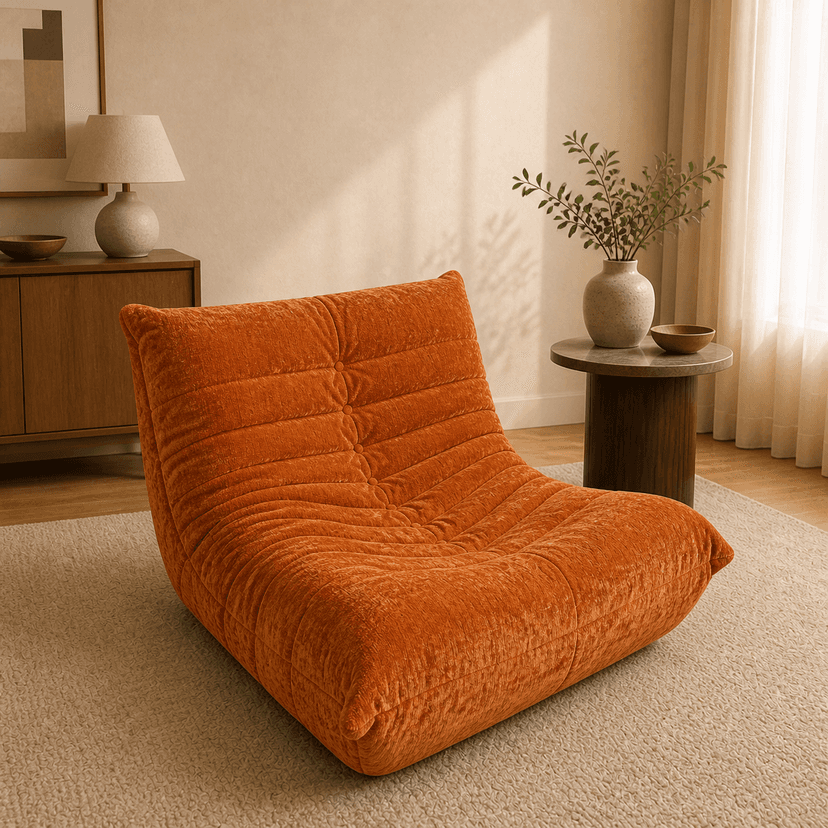
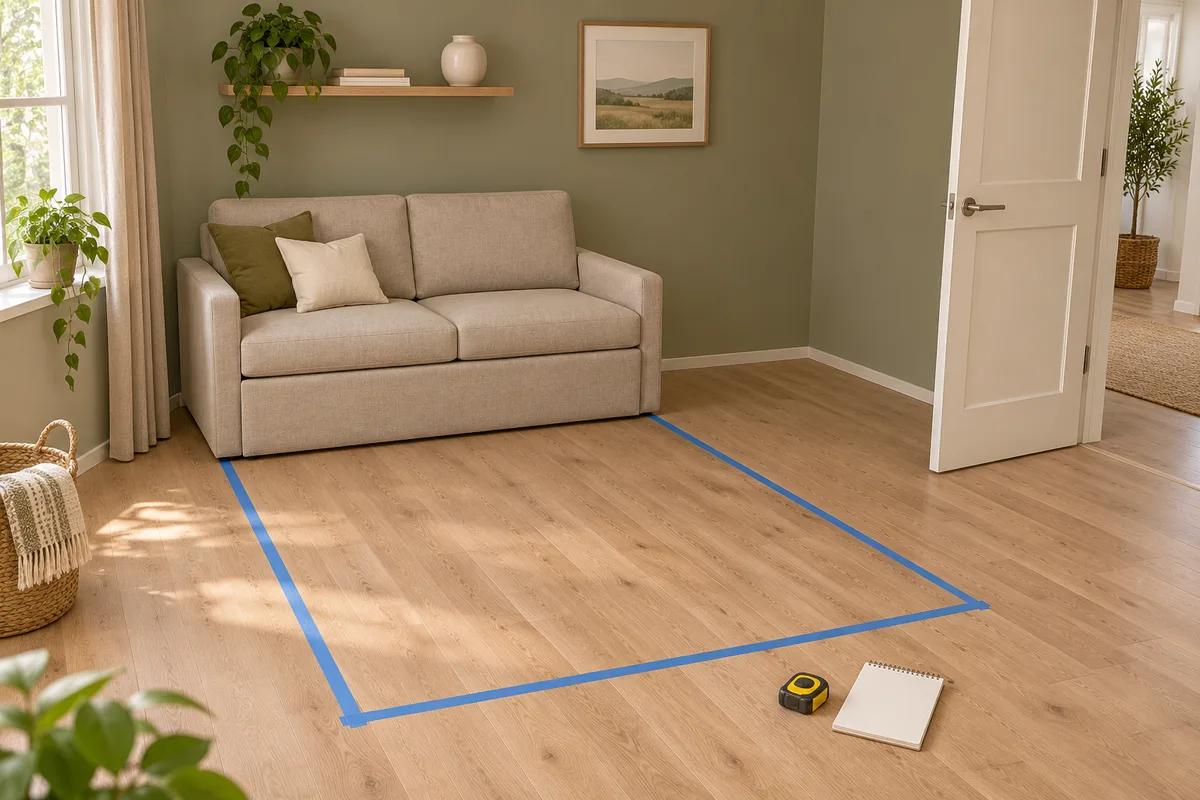
The orange Caterpillar single seat lists 90 × 107 × 75 cm overall. The Peanut Sofa Bed lists approximately 200 × 84 × 70 cm in sofa mode and 200 × 100 × 35 cm unfolded. These dimensions help plot how much floor area the furniture takes up. Measure the under-sofa opening and the height under the tabletop separately before treating either pairing as a fit.
What changes if the sofa also opens into a bed?
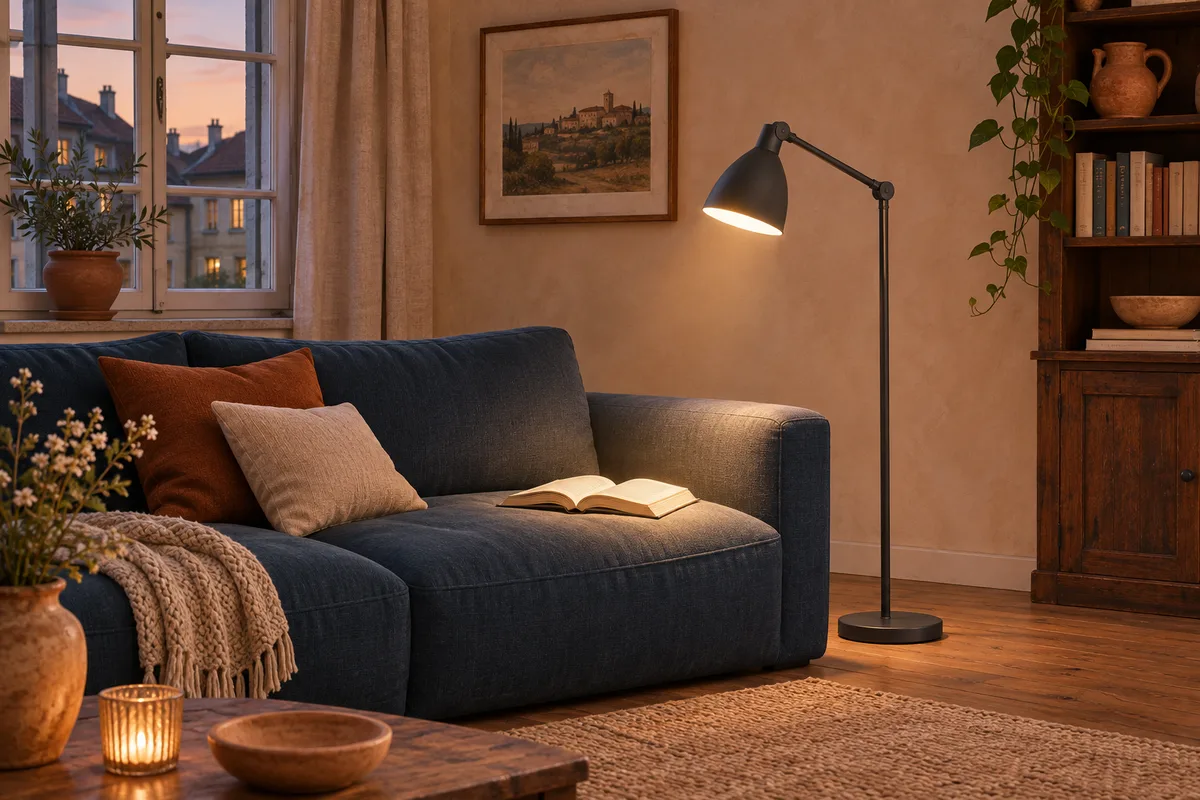
Draw the sofa in both configurations and leave space for the move between them. Work out where you would park the side table before unfolding or closing the bed. Check that the parked base is out of the route people actually walk. A table that fits while you sit can still be in the way when the bed is open.
How can I check reach without owning the table?
Mock up the top with a cardboard outline resting on a stable surface at the proposed height. Sit where you usually sit and reach for a closed notebook without leaning against the mock-up. Mark where the base would sit and test standing up and walking past. This checks layout and reach. Use the table maker’s instructions for its actual load and use.
What should I ask for before ordering?
Ask for the base height and footprint, the free height under the top and a side view of the exact table. For the sofa, request the opening height and first obstruction from the intended side. If either set of measurements is missing, leave the fit open or plan a freestanding position you can confirm.
| Check | Published size or your measurement | Decision |
|---|---|---|
| Caterpillar single seat, orange | 90 × 107 × 75 cm overall | Ask for the opening at the chosen side |
| Peanut Sofa Bed | Approx. 200 × 84 × 70 cm seated; 200 × 100 × 35 cm unfolded | Draw both shapes and a parking position |
| Opening below the sofa | Lowest height along the route: ___ | Compare with the tallest point of the base |
| Table base | Height including pads or wheels: ___ | Leave room to move it without rubbing |
| Width and depth | Usable width: ___; first obstacle from edge: ___ | Compare with the footprint and position of the upright |
| Underside of the tabletop | Lowest underside: ___; sofa arm or cushion: ___ | Check that every part of the planned overlap clears |
| Seated reach | Top position you can reach comfortably: ___ | Try it from your usual seat |
| Moving around the sofa | Route and parked table outline: ___ | Check getting up and both sofa-bed modes |
A practical checklist before you decide
- Measure the lowest opening and compare it with the tallest point of the table base.
- Mark the insertion path, including the first obstruction and where the upright stops.
- Compare the underside of the top with the arm or cushion it would cross.
- Mark the top position and check seated reach, standing up and the walking route.
Sources and applicable terms
General planning guidance, not a physical product or access test. The chosen variant's measurements and instructions take precedence. Terms can change; check them before payment.